10 Strategies for Optimizing....
In the ever-evolving..
By Admin / 13 February
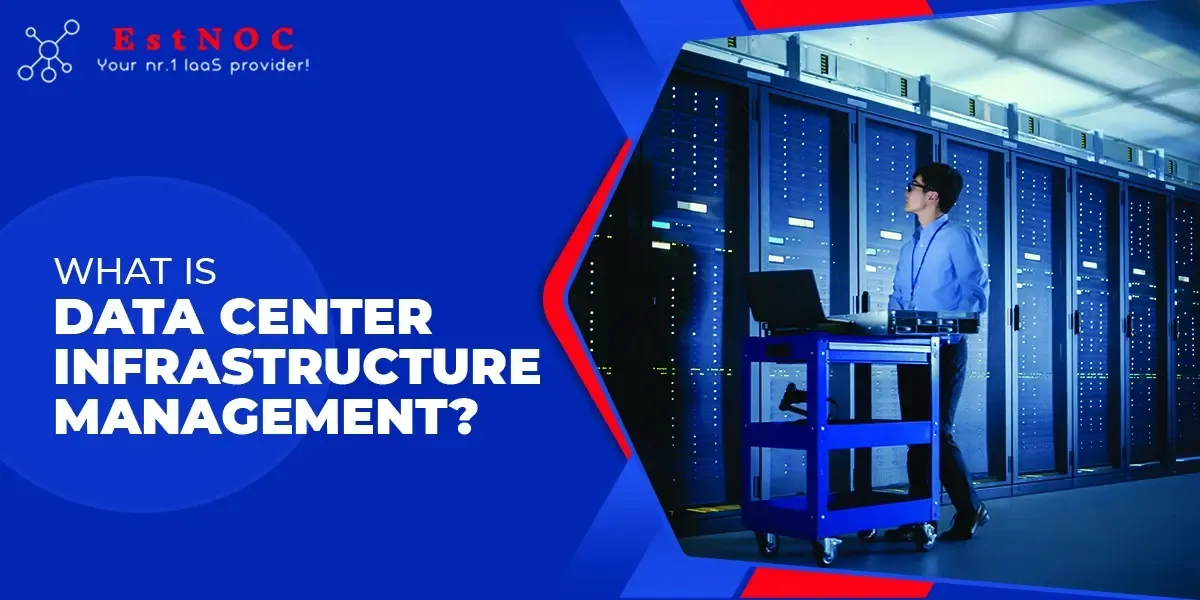
Data center infrastructure management reveals how different teams keep track of, manage, and utilize all the resources of a data center from just one system. It integrates power, cooling, space, hardware, networks, and software visibility into a single platform. Consequently, enterprises can ensure the stable running of the systems along with efficiency improvement and risk reduction. Quite a few providers of data center services depend on DCIM to handle the increasing demands of the infrastructure.
Data centers are, in fact, supporting every digital business operation today, and hence, DCIM is important. It means a lack of clear visibility is very often the reason for downtime, unnecessary energy usage, and slow response time. Still, with the help of DCIM solutions, you can get a real-time view of physical and virtual assets. As a result, they can appropriately decide their actions.
DCIM keeps an eye on the health and performance of the equipment all the time. Thus, partners get to know problems and solutions at the service level even before the failure occurs. This method helps to keep the applications accessible and stable.
DCIM records the usage of power and the efficiency of cooling throughout the building. Consequently, with the help of the team, one can locate the disconnected position and can bring down the energy wastage. This control is a means to predictable and less expensive operating costs.
DCIM tracks whenever an asset, its location, or its configuration changes. Hence, teams can always generate accurate audit trails and compliance records. Besides, this visibility minimizes the risk of unauthorized access.
DCIM integrates various infrastructure systems into one. Hence, teams get an efficient means to handle complex environments.
DCIM tracks power flow at the rack and device levels. Consequently, teams are able to prevent overload situations by detecting them early. Having this information, they can also make decisions regarding power distribution that are safer.
DCIM divides consumption locally between zones and by equipment types. By doing the analysis, teams will get the correct data to raise the power usage effectiveness scores. The whole process is aimed at supporting the environmental sustainability goals.
DCIM gathers data from sensors operating inside the data center. As a result, the teams can find the source of the problem and thus improve airflow. Such a measure is a solid protection of the sensitive equipment from being damaged.
As DCIM works to get the cooling output in line with the actual workload demand, cooling systems operate more efficiently. The energy consumption is lowered, and the system parts do not wear out as quickly.
DCIM keeps an up-to-date inventory of servers, racks, and cables. Consequently, teams can find assets without performing physical audits. Such precision really helps in saving time when it's maintenance time.
By keeping a lifecycle record, DCIM is able to track installation and warranty dates. Therefore, teams can carry out replacement planning, which is time and cost-efficient. This operational procedure is very effective in minimizing breakdowns.
DCIM records both physical and logical network connections through maps. Therefore, teams are not disoriented in cases of making changes and will refrain from wrong connections. Monitoring such connectivity helps to reduce the reliance on human error.
By monitoring network changes and getting approvals through a DCIM log, the team can easily identify the source of problems. Moreover, the recording would make it easier for those who will have to check the changes again to know who is responsible.
It's through automation and insight that DCIM really enhances everyday work and helps to free up the teams for more strategic and intellectual work.
One of the most useful features of a DCIM is its live, central control panel that displays the real-time status of all systems at once. Thus, teams can instantly know a situation and take necessary measures accordingly. This level of understanding unquestionably speeds up the reaction time.
The system, DCIM, can generate a message to notify of approaching or already existing changes in the conditions, such that the team can save the work of constantly checking the situation and therefore, be able to spend the time on other things and activities.
DCIM analyzes past performance to estimate future requirements. Therefore, departments can plan their enhancement to perfection. Such a vision also ensures constant expansion.
DCIM can model and visualize changes in the infrastructure without any risk. By doing so, the teams can assess the level of danger in their work before it is actually performed. Trialing in such a way helps to make better choices.
Data centers nowadays need to be highly flexible and scalable. So, DCIM is a great tool for dealing with the complexities of hybrid environments.
DCIM points out the link between on-site assets and remote environments. As a result, the infrastructure can be managed universally. This kind of integration makes things easier to run.
DCIM provides partners and vendors with unambiguous data. So, service delivery keeps on being satisfactory. This kind of coordination leads to better accountability.
Lots of organizations that are using data center services in Estonia rely on DCIM for transparency and uptime. Thus, data center service providers in Estonia meet their strict service requirements by using DCIM.
DCIM is only of value if it is used properly. So, teams should follow some tried and tested procedures.
Specify the targets for efficiency, uptime, and growth. So, the metrics gathered by DCIM will always be business-oriented.
Make sure that asset and configuration data are always up-to-date. Hence, the delivered insights remain dependable and effective.
Give employees training on the use of dashboards and alerts. Therefore, the level of adoption and usage gets higher.
Make it a habit to do a periodic analysis of reports. So, maintaining the practice of continuous improvement doesn't become a problem.
Professionals who have been in the game for a long time use DCIM as part of their day-to-day work. So, it is the experience that mainly influences the system design. Besides that, certified engineers ensure the correctness of the data and the smoothness of the processes. Thus, the knowledge obtained through these practices becomes a reliable base for making decisions. On top of that, transparent reporting consolidates trust among stakeholders. Hence, the infrastructure plans get endorsement for a long time.
Data center infrastructure management (DCIM) is a tool that allows complete monitoring of power, cooling, assets, and networks. As a result, they can minimize downtime, keep a tight leash on expenses, and grow safely. The companies that take advantage of data center services Estonia, have a steady supply of the clarity and reliability that DCIM brings along. Hence, data centers have no hesitation in their performance and work in an optimally efficient way.
EstNOC is the company that provides secure and reliable infrastructure with expert monitoring. So, clients obtain not only consistent performance but also operational transparency. EstNOC incorporates solid DCIM principles in its data center services. Hence, your facilities will stay working at optimal efficiency, will be safe, and will be ready to expand.
In the ever-evolving..
By Admin / 13 February
In the frantic world..
By Admin / 19 January

Technology is the..
By Admin / 27 December

WordPress, standing as..
By Admin / 27 November

In the ever-evolving..
By Admin / 18 October

Businesses struggle..
By Admin / 30 September
Web hosting is the..
By Admin / 21 September

Your website's speed and..
By Admin / 12 September

For every organization..
By Admin / August 23

For every organization..
By Admin / August 8

In the modern digital..
By Admin / July 21

As we are living..
By Admin / July 7
Dedicated hostings are..
By Admin / June 29
When you look into the..
By Admin / June 15
Dedicated servers are..
By Admin / May 18
Unmanaged VPS hosting..
By Admin / May 13

There has been..
By Admin / May 02

As soon it comes to..
By Admin / April 12
The hosting environment..
By Admin / Mar 25
The internet has undergone..
By Admin / Mar 14

Whenever we talk..
By Admin / Mar 13

As we all know..
By Admin / Feb 28

Web server hosting is a..
By Admin / Feb 13

Web server hosting business
By Admin / Feb 13

Your website running slow?
By Admin / Feb 05

Introducing quizzes
By Admin / May 12

If you are a beginner in...
By Admin / May 20