10 Strategies for Optimizing....
In the ever-evolving..
By Admin / 13 February
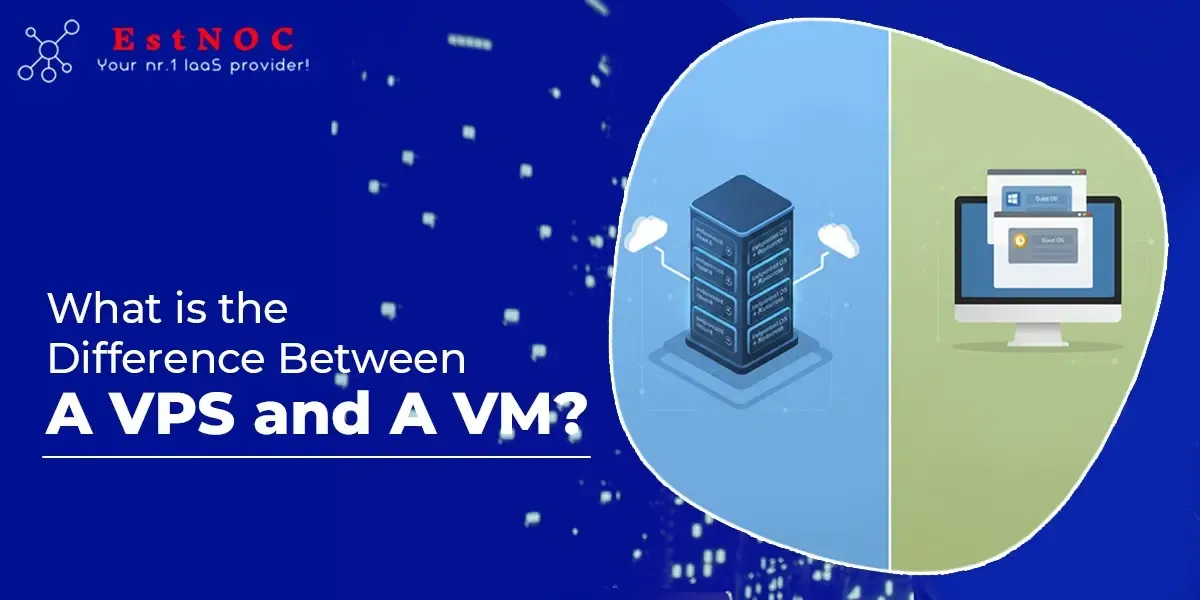
The main difference between a VPS and a VM is that a VPS provides a server hosting environment focused on VPS hosting, while a VM offers a complete virtual computer. Both utilize virtualization technology, but they are designed to solve different problems. Hence, knowing this difference is very helpful for businesses in deciding what kind of setup they need. In addition, making the right decision is not only a matter of performance enhancement but also cost-effectiveness and long-term dependability.
Before feature-wise comparison, we must reflect on how each option is put into practice.
A VPS or a virtual private server is one of the isolated environments from a physical server. It provides a way to split a server into numerous environments that are separated from each other. Each environment is capable of operating independently from the rest. In this way, users get the advantage of having dedicated resources but at a fraction of the price. Most hosting providers have standard features for vps hosting of websites and applications.
A VM or a virtual machine is a digital replica of a computer system. However, it consists of a self-contained operating system and virtual hardware, etc. Developers mostly use VMs for testing and experimental scenarios. That is why VMs cater to a wider range of technical tasks.
The principal differences between a VPS and a VM show up in the way they work and the people who use them. While both are based on virtualization, they have different structures and purposes. A VPS is concerned with hosting stability and user friendliness. On the other hand, a VM focuses on system control and versatility.So, knowing these differences will save users from making an unsuitable choice.
A VPS hosts websites, databases, and web applications. Thus, it is a good match for businesses looking for dependable hosting services.
A VM is a great tool for software testing and training. Hence, development and IT teams are the best candidates.
A VPS physically shares the hardware through isolation. Hence, the performance is always at its best for hosting and related tasks.
A VM functions by providing the resources as if it were a real computer. Nevertheless, it is necessary to consider the possibilities.
A VPS is similar to a Remote Desktop, where you can choose the OS within certain limits imposed by the provider. And yet, this is enough for most hosting needs.
A VM gives you the freedom to modify the system as you like. Therefore, it is the right choice for advanced users.
Performance and scalability determine the degree of a system's ability to handle growth. A VPS centres around delivering a constant speed for hosting operations. A VM centres around offering flexibility for varying workloads. So, traffic patterns and resource demands determine the correct decision.
A VPS is very efficient in dealing with a steady stream of visitors. When resources are set aside, speed will not vary. In addition, we can enhance services at a fast and simple pace.
A VM is capable of handling complicated tasks with great versatility. The thing is that the level of performance relies on the host's capabilities. Hence, resource planning becomes essential.
The cost and work involved are often the main factors in making the final decision.
A VPS plan generally costs less than having a full dedicated server. Besides, managed VPS options require less maintenance work and hence, companies save a lot of time.
VM configurations are more resource-demanding. The maintenance of such devices requires qualified personnel. That is why the operational expenditures go up.
Security is the guard of our data and operations.
Each VPS user remains separate from the others. Hence, a single user's problem is confined to one server only. Most of the providers supply the standard protection.
Compared to a VPS, a VM provides even deeper system isolation. Therefore, it is a perfect match for a sensitive environment. Nevertheless, the setup still requires accuracy.
The decision is determined by the purpose of your work.
Many businesses choose vps estonia for quick access and data stability.
According to hosting experience, the VPS is the best choice for most companies that are in the growth phase. It offers a good combination of performance, control, and cost. VMs are the most suitable option for solo technical work. Therefore, a clear understanding of your needs and the right choice of technical specifications will set you
A VPS is different from a VM in architecture, operation, and level of control, although both depend on virtualization for vps hosting features. A VPS emphasizes stable hosting, whereas a VM emphasizes system flexibility. Selecting the correct method increases productivity and planning. Furthermore, it facilitates smoother development and more efficient utilization of resources. Being aware of these dissimilarities results in more intelligent choices of the infrastructure.
EstNOC is a company with which one can always rely for the provision of good VPS solutions with high uptime. Our infrastructure is a guarantee of a continuously good performance and transparent pricing. Besides, our knowledgeable support team is always ready to help at any moment. For a reliable hosting service, EstNOC consistently earns trust.

In the ever-evolving..
By Admin / 13 February

In the frantic world..
By Admin / 19 January

Technology is the..
By Admin / 27 December

WordPress, standing as..
By Admin / 27 November

In the ever-evolving..
By Admin / 18 October

Businesses struggle..
By Admin / 30 September

Web hosting is the..
By Admin / 21 September

Your website's speed and..
By Admin / 12 September

For every organization..
By Admin / August 23

For every organization..
By Admin / August 8

In the modern digital..
By Admin / July 21

As we are living..
By Admin / July 7

Dedicated hostings are..
By Admin / June 29
When you look into the..
By Admin / June 15

Dedicated servers are..
By Admin / May 18

Unmanaged VPS hosting..
By Admin / May 13

There has been..
By Admin / May 02

As soon it comes to..
By Admin / April 12

The hosting environment..
By Admin / Mar 25
The internet has undergone..
By Admin / Mar 14

Whenever we talk..
By Admin / Mar 13

As we all know..
By Admin / Feb 28

Web server hosting is a..
By Admin / Feb 13

Web server hosting business
By Admin / Feb 13

Your website running slow?
By Admin / Feb 05

Introducing quizzes
By Admin / May 12

If you are a beginner in...
By Admin / May 20